
Three Times Astronomy Influenced History in the Most Chaotic Ways
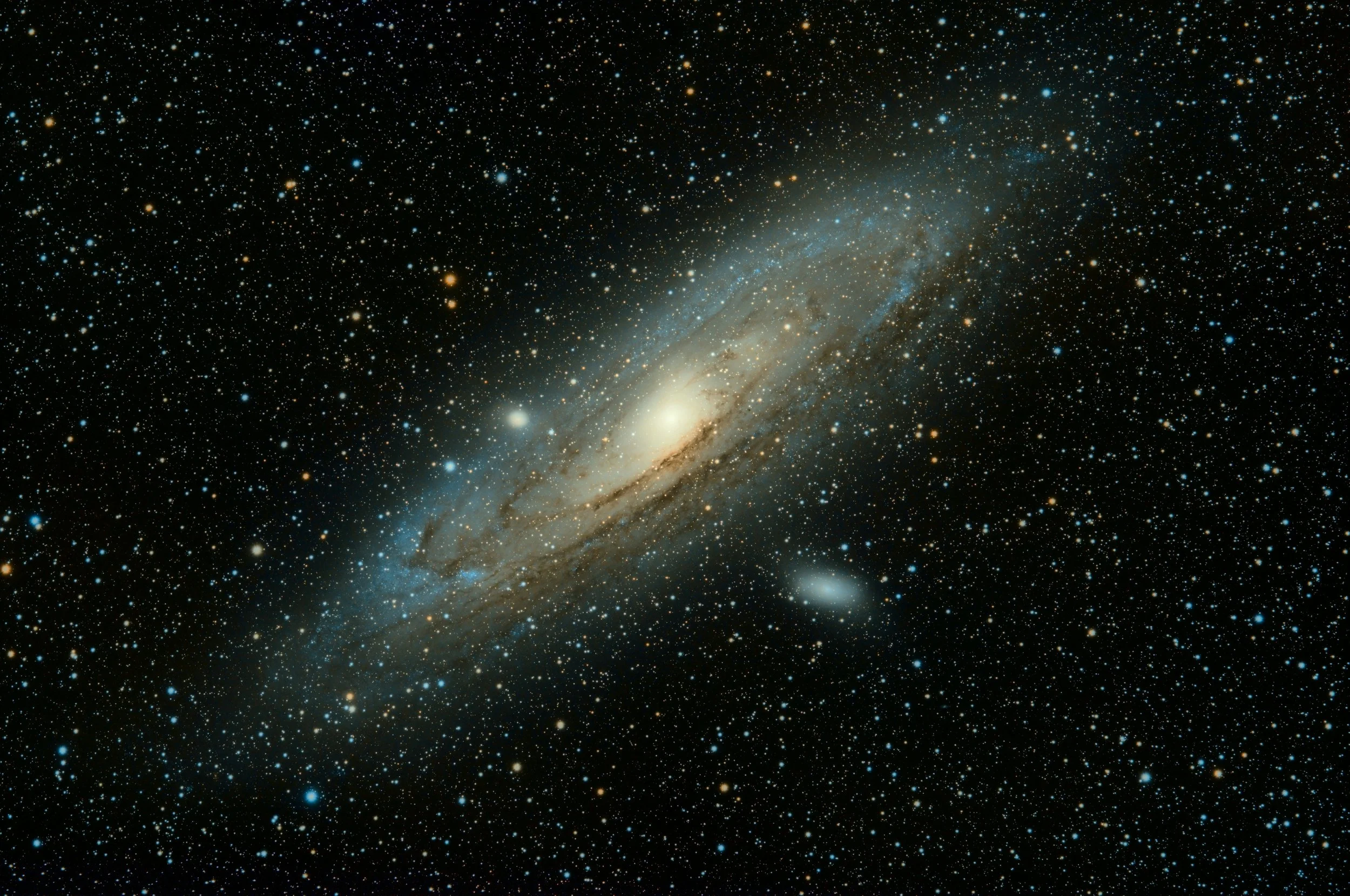
Photo by Guillermo Ferla on Unsplash
These days, many of us look up at the night sky in quiet awe. To some, it may prompt them to wonder the meaning of life itself, while others find comfort in the endlessness of it all.
But it hasn’t always been this way.
Here’s three of the strangest and most dramatic moments when the stars kicked humanity into chaos and exponential terror.
The 1910 Halley’s Comet Panic: When the skies convinced people the world would end
At the start of the 20th century, Halley’s Comet passed spectacularly close to Earth. So close in fact that we actually travelled through its tail. Scientists of the time announced that comet tails contained toxic cyanogen gas, so naturally, newspapers ran with headlines such as:
EARTH TO PASS THROUGH POISON GAS. ALL LIFE MAY PERISH.
Of course, people genuinely panicked. Gas masks sold out, “anti-comet pills” were advertised for protection, churches overflowed with repenters and some even held comet-viewing parties, just in case it was their last night alive.
However, nothing happened.
But thanks to the fear of the unknown and panic spread by newspapers it remains one of the most bizarre global panics caused entirely by an astrological event.The Tunguska Event: When the sky exploded over Siberia
On the morning of 30 June 1908, just after sunrise, the sky above eastern Siberia detonated.A huge fireball (most likely a comet or astroid fragment) exploded in the atmosphere with the force of 1000 Hiroshima bombs. People 500 miles away were knocked off their feet, windows shattered in remote villages and the shockwave circled the globe twice.
19 years later, researchers finally reached the site, discovering 80 million trees flattened in a perfect radial pattern. But there was no crater. No debris. Just an eerie silence.
To this day, Tunguska remains one of the strangest astronomical events ever recorded.
The Eclipse That Stopped a War (Literally)
During 585 BC near the Halys River (now in modern-day Turkey), the Mede and Lydian armies were locked in a fierce, brutal, years-long battle. But on 28 May, the sun suddenly vanished and the sky darkened due to a total solar eclipse. The soldiers, interpreting this as a sign of the gods’ disapproval, dropped their weapons in fear and confusion. Almost immediately, the celestial event became the catalyst for a peace treaty, which ended the six-year war.
It became known as “The Battle of the Eclipse”, the only recorded time an astronomical event ended a war instantly.
Thankfully, the night sky doesn’t hold such fear for us anymore, but it is still full of stories – and you can explore them all!
This article is part of Astounding Astronomy, a series exploring moments in history when celestial events inspired by fear and wonder.